Segera Community Borehole
What
- Borehole drilling & construction management
- Water supply system setup
- Community engagement & sustainability planning
Who
Segera Community Based Organization (Segera CBO)
Where
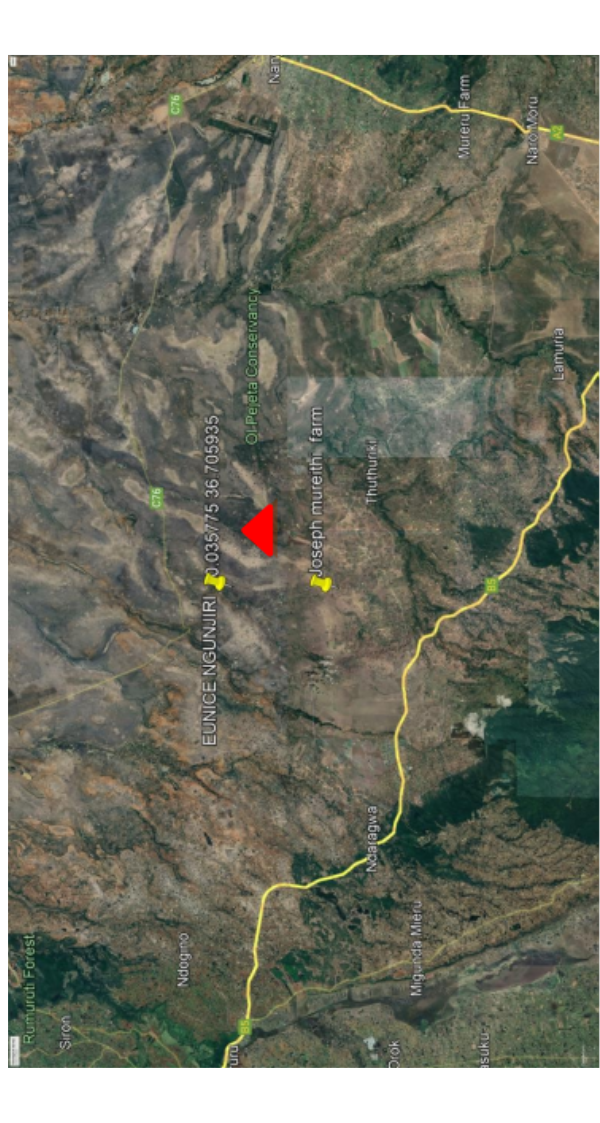
Euasonyiro Suguroi Block IV/112 Segera Location, Ngobit Ward, Makandara Sub county, Laikipia County, Kenya. (Site coordinates and maps are included in the EIA annex).
Project Overview
The Segera Community Borehole is a flagship water project spearheaded by Segera Community Based Organization (Segera CBO) to address the acute water shortages in Segera, Ngobit Ward, Laikipia County.
For years, residents have relied on unsafe surface sources and distant water points, exposing families to disease and burdening women and children with long, exhausting treks.
This borehole initiative provides a sustainable supply of clean water for households, schools, health facilities, and small-scale farming.
Beyond improving health and saving time, the project strengthens food security, supports livelihoods, and builds community resilience against drought and climate change. It is a milestone towards dignity, self-reliance, and sustainable development for Segera and the wider Laikipia region.
Capacity
- Serves approximately 500 households and community institutions.
- Provides safe, clean water for domestic use, livestock, and small scale farming.
System length
• Maximum drilling depth: up to 220 metres (hydrogeologist’s recommendation).
• Typical borehole construction: 8" diameter borehole to depth, with 6" steel casing and machine-cut screen, gravel pack and surface headworks; motorized pump and filtration for delivery.
Project Cost
Estimated total project cost: Ksh 6,200,000 (mobilization ~Ksh 80,000; drilling & works ~Ksh 5,400,000 figures per project budget).
Supply coverage
Water distribution will prioritize community water points near households, schools and health facilities, with storage tanks and short reticulation pipes to selected points. Final reticulation design will be done during the commissioning phase.
Completion
- Planning & design: January 2025 (1 month).
- Site surveying & hydrogeological report: February 2025 (2 weeks).
- Registration & permits with WRA / NEMA: February – March 2025.
- EIA process and approvals: March 2025 (EIA completed; NEMA approval / EIA license & WRA permit to be obtained).
- Drilling, development, testing and commissioning: to commence after permits (drilling approval estimated 2 weeks; commissioning/testing a few days once drilling complete). Exact dates depend on permit issuance and contractor mobilization.
Impact of the project on the community
• Reliable domestic water supply: reduces dependence on polluted surface sources and costly water vendors.
• Health improvements: expected reduction in waterborne diseases (cholera, typhoid) through access to safe water and improved sanitation.
• Time savings & empowerment: women and children spend less time fetching water more time for school, livelihoods and economic activity.
• Local economic benefits: water availability supports small-scale farming, rental occupancy (the EIA notes water for domestic use including rental apartments) and secondary local development.
• Environmental safeguards: the EIA includes an Environmental Management Plan (EMP) and mitigation measures to minimize dust, noise, fuel/oil spill risks, and to protect groundwater (sanitary sealing, monitoring, decommissioning plan).
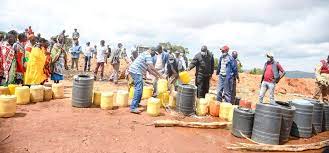
“This borehole means our children can drink clean water and our mothers no longer walk for hours each day.”